
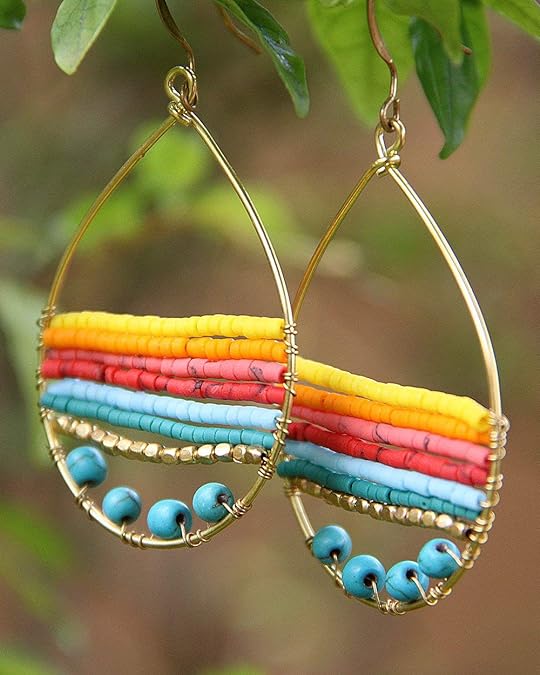
Quick Answer: The common earring fastenings are the friction back, often called a butterfly or clutch, which slides onto a post; the screw back, which threads onto a post; the lever back, which snaps shut; and the French or fish hook on dangle earrings, where the wire passes through the ear with no closure. Akitai's boho teardrop earrings hang from fish hook wires in the product photos. Earrings and their backs are also common nickel triggers.
An earring back is the small piece that keeps an earring on, and the right one depends on the style. This guide explains the main fastenings, what is said about how secure they are, and what to know about dangle earrings and nickel. For Akitai's own earrings, see the boho earrings collection, and for how to style them, see Akitai's post on styling teardrop earrings.
There are about five you will meet most often. The descriptions follow Wikipedia's earring entry (checked October 2026), except the lever back, which is a plain description of how it works because that page does not cover it.
| Fastening | How it works |
|---|---|
| Friction back (butterfly, clutch) | Removable back that holds a post in place |
| Screw back | Screws onto a threaded post |
| Lever back | Hinged lever that snaps shut |
| French or fish hook | Wire passes through the ear, no closure |
| Threader | Thin chain slipped through the ear hole |
Wikipedia says a stud earring is held in place behind the ear by a removable friction back or clutch, sometimes called a butterfly or scroll fitting. A hoop earring is usually a loop of metal that can be opened to pass through the piercing.
No source checked ranks them. Wikipedia says the fastenings for pierced ears are generally more secure than clips, so the risk of losing an earring is lower. It also says some more expensive studs have threaded posts, so that a screw back can hold the stud securely in place to prevent loss.
A French hook, which passes through the piercing with no closure, is the opposite case. Wikipedia says small plastic or silicone retainers are sometimes used on the ends. If you worry about losing an earring, a back that closes may suit you better than a hook.
Wikipedia says a pierced dangle earring is generally attached with a thin wire passing through the earlobe. It may connect to itself with a small hook at the back, or follow the French hook design, and dangle earrings rarely use a post. It says their length ranges from a centimeter or two to brushing the wearer's shoulders. No source compares weights, so none says which back suits a heavy pair. Comfort and fit are personal, so try the back that feels secure to you.
The product photos show fish hook ear wires, with no separate back. Akitai's gold boho teardrop earrings are beads and stones on a teardrop frame, about 3 grams each and about 2 by 1.5 inches, according to the product page, which also says they are handmade by women artisans in Thailand. Since Akitai is the brand behind this site, they are our own products. See the full collection and Akitai's guide to earrings by face shape.
It can. The American Academy of Dermatology (checked October 2026) says earrings, earring backs and watches are some of the biggest culprits for nickel allergy, and advises wearing only jewelry that is nickel-free or made from metals such as surgical-grade stainless steel, gold of 18 karat or higher, pure sterling silver or platinum. Akitai's product page lists these earrings as nickel-free, but nothing in the product data tests the metal, and the page does not name the base metal.
The AAD estimates that more than 18 percent of people in North America are allergic to nickel. It says a rash from nickel allergy is not life-threatening but can be uncomfortable, and that anyone with a rash that blisters, becomes infected or comes and goes should see a board-certified dermatologist. If you know you react to nickel, check the metal of any earring and back before you buy.
A removable friction back that holds an earring post in place. Wikipedia also calls it a clutch or scroll fitting.
An earring with a hook-shaped wire that passes through the ear with no closure. Wikipedia calls it the French hook design, and notes that small plastic or silicone retainers are sometimes used.
One with a hinged lever that snaps shut behind the ear.
Wikipedia says a threaded post lets a screw back hold a stud securely in place, which prevents loss.
Dangle earrings usually use a hook or a French hook, and only rarely a post, per Wikipedia. No source compares them by weight, so choose the one that feels secure to you.
Nickel in earrings and backs is a common trigger, says the American Academy of Dermatology, which advises nickel-free jewelry.
Available Now
Browse the full collection — free Prime shipping on eligible orders. Every purchase directly supports our artisan community.
Shop on Amazon