
Quick Answer: Hang a window sun catcher where direct sun reaches it, because the colors come from sunlight passing through. In the US, the Department of Energy's passive solar guide advises windows that face within 30 degrees of true south and stay unshaded from 9 a.m. to 3 p.m. in winter, which tells you where the most sun falls. Keep it away from anything flammable, since crystal and glass in direct sun can start a fire.
A window sun catcher needs two things: sun, and a place to hang it away from anything that could burn. This guide covers which windows get the most direct sun, how the seasons move the light, and how to keep the piece away from anything that could burn. For how the colors are made, see what a sun catcher is and how a crystal prism makes rainbows. For cars, see how to hang a sun catcher in a car.
The one that gets the most direct sun. The US Department of Energy's Consumer Guide to Passive Solar Home Design (checked October 2026) is about heating homes, not sun catchers, but it tells you where the sun falls. It advises windows that face within 30 degrees of true south and, in winter, are not shaded from 9 a.m. to 3 p.m. Applying that to a sun catcher is a reasonable reading, not something the guide says.
| Window | What the DOE guide says |
|---|---|
| Within 30 degrees of true south | Collects the sun, if unshaded 9 to 3 in winter |
| North, east or west | Less glass advised in colder climates |
| Shaded by eaves or trees | Overhangs or trees can shade in summer |
The guide is written for US homes. Where you live, and which way your window faces, decide how much sun it gets, so watch a window through a sunny day before you choose.
Yes, because the sun's height changes. The DOE guide says passive solar design harnesses the sun's low rays in winter and deflects its high rays in summer. The same change in the sun's angle shifts where the light enters a room, so colors that land on a floor in winter may land somewhere else in summer. That last step is an inference, not a line in the guide. The guide also says roof overhangs or trees can shade a window in summer, so the direct sun a window gets can change through the year.
Near the glass, where the sun reaches it. Wikipedia describes a suncatcher as an ornament hung indoors near a window to "catch" sunlight. No source checked for this post sets a height or a distance, so try a spot, watch where the colors land over a sunny day, and move it if they fall where you cannot enjoy them.
It can be. Snopes (checked October 2026) reports a house fire in Delton, Wisconsin on 8 March 2021 that the fire department traced to a glass "crystal ball" ornament in direct sun, which ignited a couch. The department advised keeping crystals, mirrors, glass ornaments and bottles out of direct sunlight and away from anything flammable, because they can act like a magnifying glass.
That was a large ball, not a beaded sun catcher, but the advice is general. Hang a sun catcher so that light from it does not land on a couch, curtains or paper.
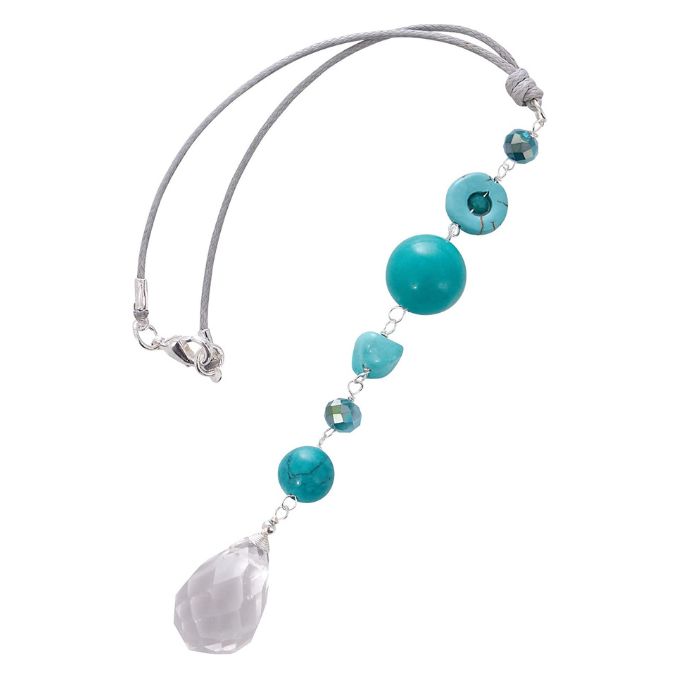
Akitai's product pages say its sun catchers can hang anywhere there are windows or mirrors. The turquoise stones sun catcher shows teal stone beads above a large, clear faceted drop in its product photo, which is the kind of piece that bends light. Since Akitai is the brand behind this site, it is our own product. Akitai's pastel cross sun catcher is another option, with a cross that many people read as a Christian symbol. See the whole sun catcher collection.
Near a window that gets direct sun, away from anything flammable that its light could land on.
One that gets the most direct sun. In the US, the Department of Energy guide points to windows facing within 30 degrees of true south that are unshaded from 9 a.m. to 3 p.m. in winter.
No source checked sets a height. Hang it where direct sun reaches it and where the colors land somewhere you can see them.
The strongest colors need direct sunlight, so the effect comes and goes with the weather.
Fire officials advise keeping crystals and glass ornaments out of direct sunlight and away from flammable things, so keep its light off them.
A small reflective, refractive or iridescent ornament hung indoors near a window to catch sunlight, according to Wikipedia.
Available Now
Browse the full collection — free Prime shipping on eligible orders. Every purchase directly supports our artisan community.
Shop on Amazon